Summary
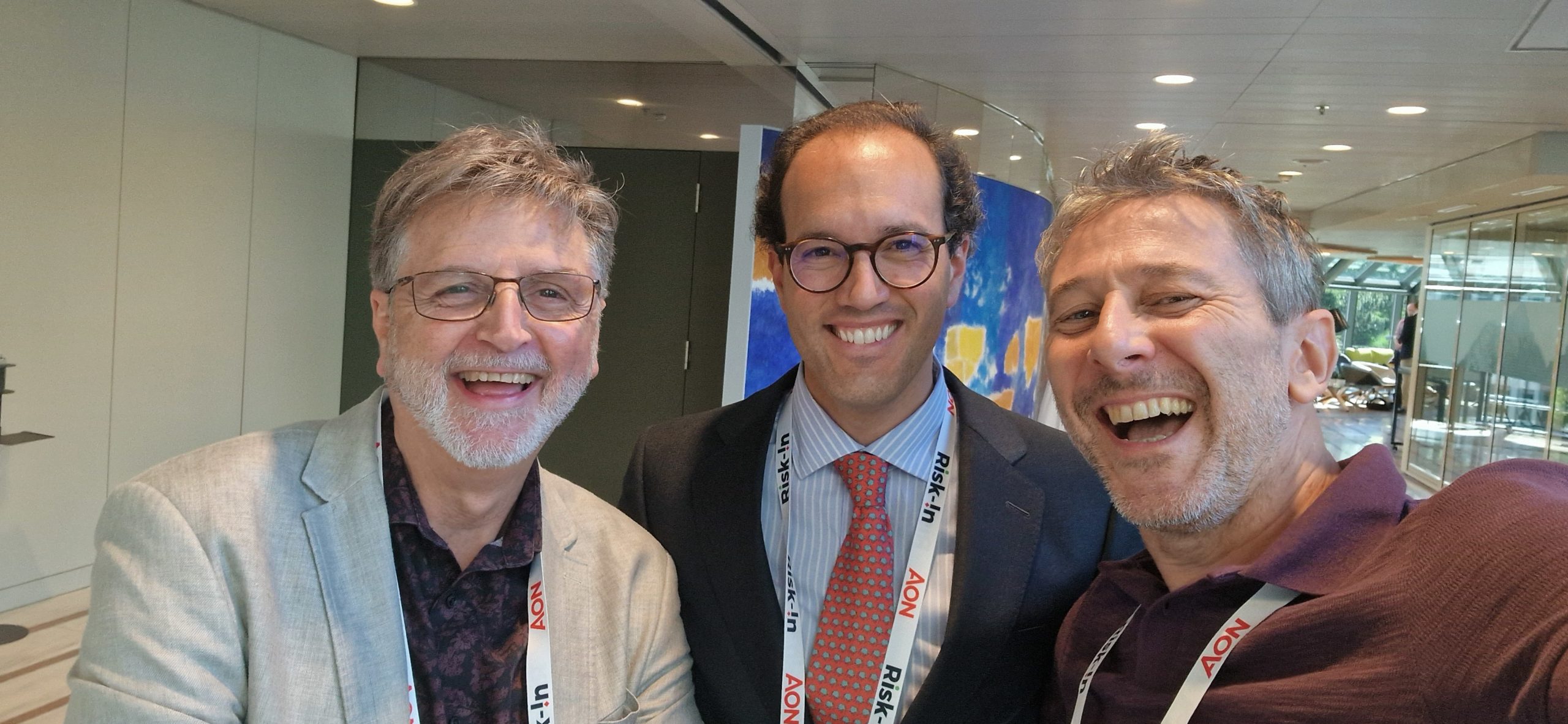
Today’s session with Didier Odorico, Integrated Supply Chain Director of Risk Management at BD, Juan Maria Marqués, Commercial Director for Iberia and Central Europe at Descartes Underwriting, and the moderator, Philippe Séjalon, CEO at The INGAGE Institute, highlighted how companies can better protect their supply chains from climate disruption through stronger operational risk mapping and parametric insurance, which provides rapid capital after major events.
The discussion also showed the opportunity for reinsurance and ART markets to combine climate data with corporate risk appetite to create scalable and efficient resilience solutions.
Building Supply Chain Resilience with TPRM and Parametric Protection
At this year’s Risk-In conference in Zurich, one of the standout sessions was “Building Supply Chain Resilience with TPRM and Parametric Protection,” a discussion that brought together operational risk management and insurance innovation in a highly practical way. Risk-In is a natural setting for a session focused on supply chain disruption, third-party exposure, and financial protection.
A timely conversation
The session was both dynamic and insightful, with strong audience engagement and a steady flow of thoughtful questions. The discussion clearly resonated with participants because it addressed a challenge many organizations now face: how to build supply chains that are not only efficient, but also capable of absorbing shocks and recovering quickly.
Didier Odorico on TPRM
Didier Odorico, Integrated Supply Chain Director of Risk Management, opened the conversation by showing why Third-Party Risk Management (TPRM) is a core pillar of end-to-end supply chain resilience. He emphasised that resilience goes well beyond traditional risk management and depends on understanding dependencies across suppliers, manufacturing sites, logistics partners, and broader value streams.
- Visibility matters, especially across large and complex supplier ecosystems.
- Risk prioritisation is essential, because not every product, node, or supplier carries the same strategic importance.
- Resilience is operational, not theoretical, with examples including dual sourcing, dual manufacturing, strategic safety stock, business continuity plans, and network optimisation.
months on average between claims reporting and compensation in the US corporate market
insured losses (€) estimated against total economic damages exceeding $9,000M. (Sept 2024: Strom Boris)
Juan Maria Marqués on parametric protection
The second part of the session shifted to financial resilience, with Juan Maria Marqués Domenech of Descartes Underwriting, Commercial Director Iberia & CE | Parametric Risk & Climate Strategy. He explored how parametric insurance can complement operational mitigation by providing fast, trigger-based protection when natural catastrophes disrupt supply chains or critical assets.
- Climate-related losses are rising, while traditional insurance often remains complex, slow, and incomplete in its response.
- Parametric solutions are built for speed, because payouts depend on predefined triggers rather than lengthy loss adjustment.
- The approach is highly adaptable, with examples covering drought, tornado, hurricane, and earthquake exposures through customized structures tied to measurable event data.
Why the discussion landed
What made this session especially engaging was the way the two perspectives complemented each other. Didier Odorico showed how organisations can strengthen resilience through better mapping, prioritisation, and management of third-party and end-to-end supply chain risks, while Juan Maria Marqués demonstrated how parametric protection can provide rapid financial support when disruption still occurs.
The audience questions added even more value, touching on implementation, data, trigger design, and the practical links between operational resilience and insurance strategy. That exchange made the session feel less like a presentation and more like a real working conversation about how risk leaders can respond to an increasingly volatile world.