Quick Summary
Users are employing AI coding tools and open-source software to remove advertisements and tracking software from smart TVs, reflecting growing consumer frustration with pervasive advertising across digital platforms.
Key Points
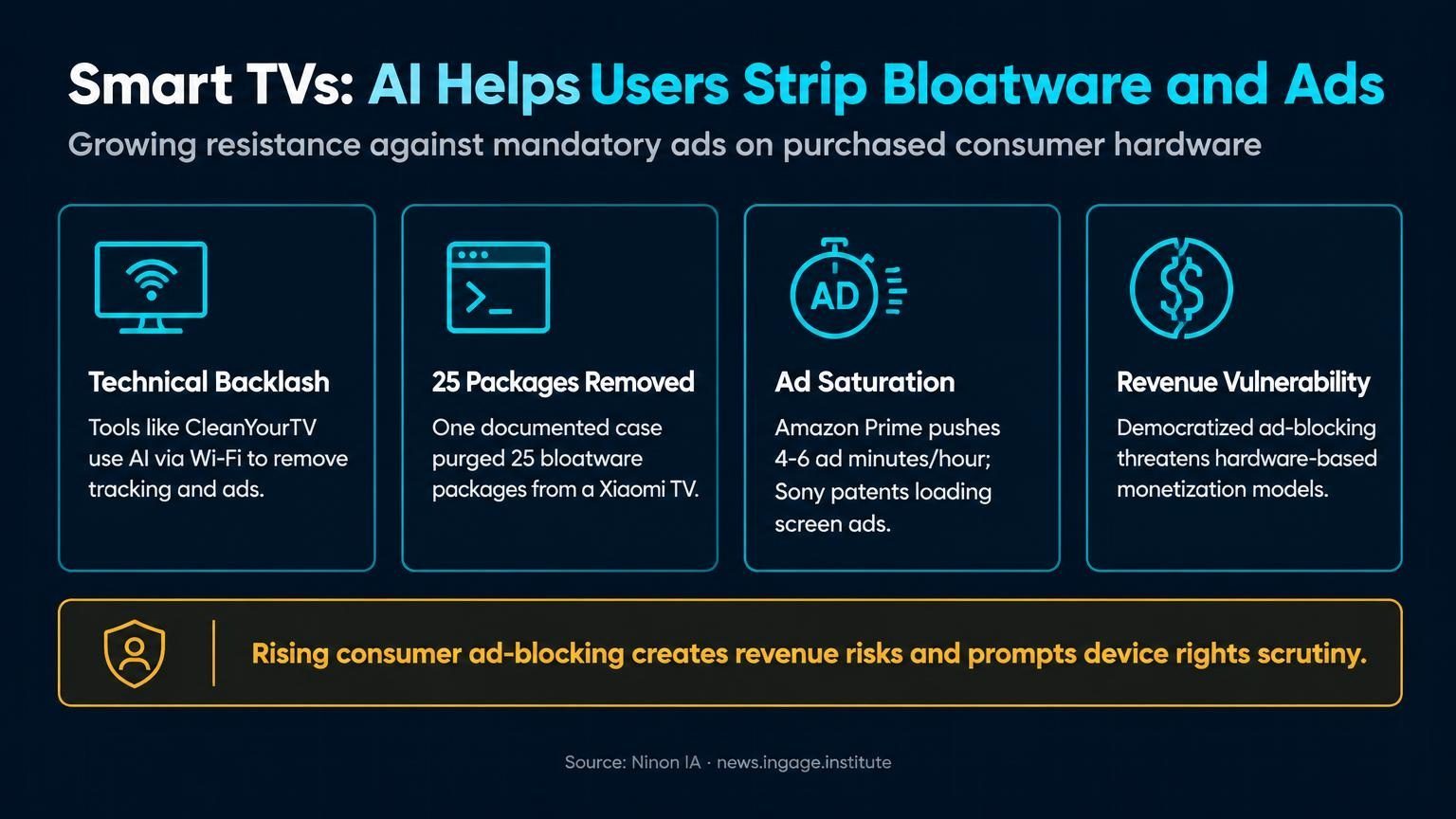
- Open-source projects like CleanYourTV enable users to connect AI assistants to their smart TVs via Wi-Fi to remove bloatware, ads, and tracking software, with one documented case removing 25 packages from a Xiaomi TV.
- Major technology platforms are expanding advertising: Amazon Prime Video has increased ad load to 4-6 minutes per hour, and Sony has filed a patent application for displaying advertisements during video game loading screens.
- This technical workaround represents a broader consumer backlash against mandatory advertising on devices that users have already purchased, even when paying for premium services.
Why It Matters
This trend signals escalating consumer resistance to advertising saturation, creating several concerns for the technology and media industries. First, it demonstrates that when advertising becomes excessive, technically savvy consumers will seek ways to circumvent it, potentially eroding revenue streams that rely on ad delivery. Second, the viral nature of these open-source projects suggests this is not isolated behaviour but a growing movement, indicating that current advertising models may be reaching breaking points with users. Third, smart TV manufacturers and streaming platforms face a fundamental challenge: they have simultaneously sold devices to consumers and built business models that prioritise ad insertion, creating tension between customer ownership and corporate interests. This situation may prompt regulatory scrutiny around transparency in advertising practices and consumer rights on purchased devices. Additionally, the sophistication required to deploy these workarounds may eventually democratise as tools become more user-friendly, potentially affecting far larger audiences. For companies dependent on advertising revenue from connected devices, this represents a long-term risk to their financial models unless they develop more balanced approaches to monetisation that respect consumer expectations.
Source: Instagram